 AETHERIUM
Solar Power from Space: Harnessing the Sun Beyond Earth ☀️🚀
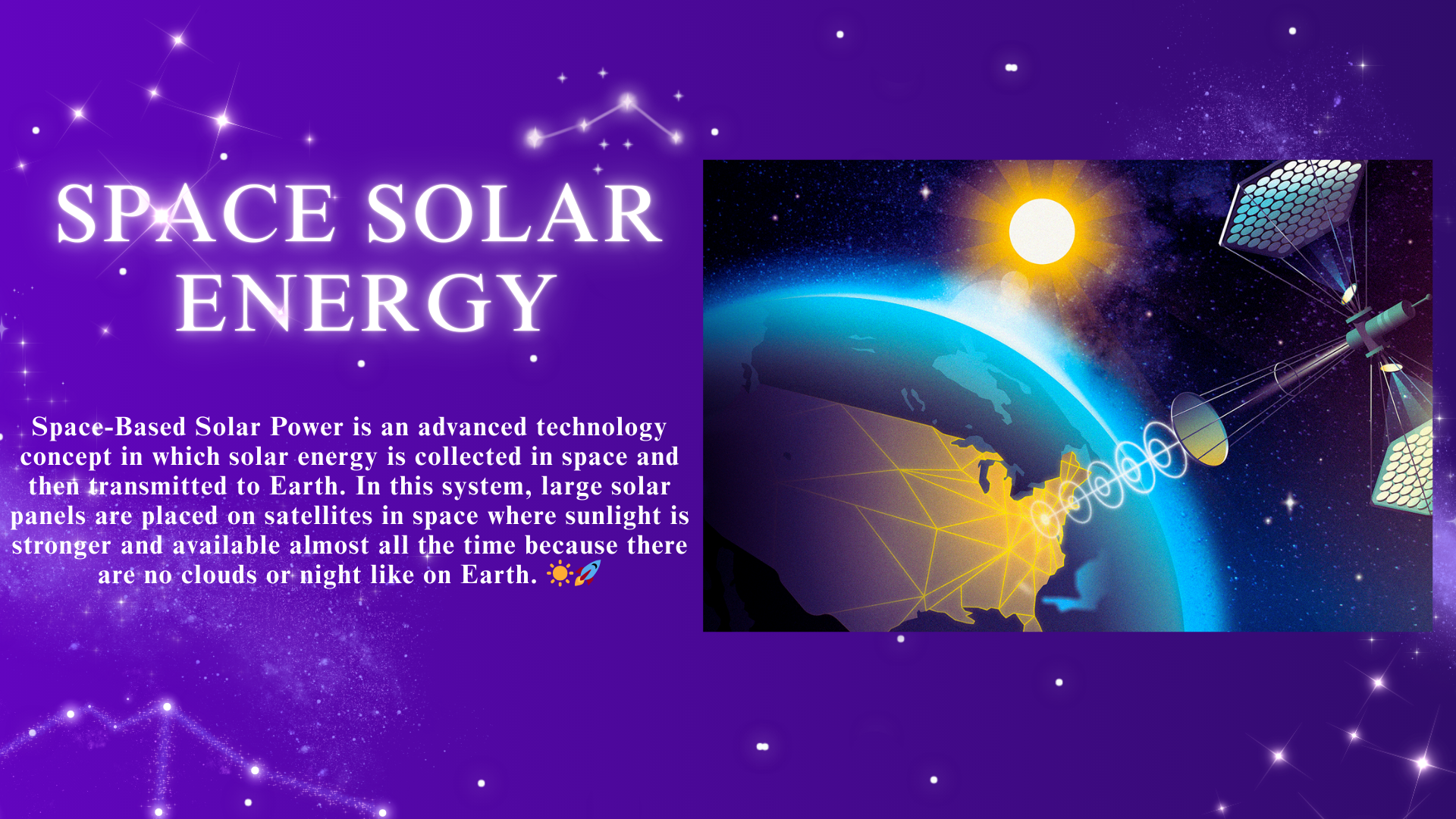
Space-Based Solar Power is an innovative technology concept where solar energy is captured in space and transmitted to Earth as electricity. Unlike solar panels on Earth, satellites in space receive constant and strong sunlight, unaffected by night, clouds, or weather conditions. This makes space-based solar power a promising solution for meeting the growing energy demands of the world.
How Space-Based Solar Power Works
The process of generating solar power from space involves three main steps:
Energy Collection in Space
Large solar panels are installed on satellites orbiting the Earth. These panels convert sunlight into electricity continuously since space receives uninterrupted sunlight.
Energy Transmission to Earth
The electricity generated in space is converted into microwave or laser beams. These beams are safely transmitted from the satellite to special receiving stations on Earth.
Conversion to Usable Electricity
The receiving stations convert the transmitted energy back into electrical power, which can then be supplied to homes, industries, and power grids.
Advantages of Space-Based Solar Power
Continuous Energy Supply: Unlike Earth-based solar panels, space solar panels generate energy 24/7.
Clean and Renewable: It produces electricity without greenhouse gas emissions.
High Efficiency: Sunlight in space is stronger and more consistent than on Earth.
Global Reach: Can supply electricity to remote areas where conventional energy sources are limited.
Challenges
High Costs: Launching large solar satellites into space requires significant investment.
Technical Complexity: Converting energy to microwaves/laser and transmitting it safely is technologically challenging.
Space Debris Risk: Satellites and panels must be protected from collisions with space debris.
International Regulations: Coordinating space energy projects requires global collaboration and legal agreements.
Research and Development
Many space agencies and companies are exploring space solar power:
NASA is conducting research on satellite solar arrays and wireless energy transmission.
European Space Agency (ESA) studies the feasibility and efficiency of space-based solar systems.
Japan Aerospace Exploration Agency (JAXA) has tested small-scale space solar experiments in orbit
Future of Solar Power from Space
As technology advances and costs decrease, Space-Based Solar Power could become a major source of clean and renewable energy for Earth. It has the potential to reduce reliance on fossil fuels, provide electricity to remote regions, and help combat climate change