 AETHERIUM
1. The Rise of Agentic AI and the "Agency Economy"
If 2025 was about chatbots and copilots, 2026 is the year of the workforce. The biggest shift we are seeing is the evolution of AI from a simple tool into an active collaborator. This is the dawn of Agentic AI—digital agents that can carry out complex tasks, make decisions, and interact with other systems with limited human supervision .
According to the IEEE Computer Society’s 2026 predictions, these AI agents will become standard in business environments, effectively eliminating repetitive and routine work . This shift is so profound that analysts at HP refer to it as the "Agency Economy," where human value moves upstream from doing tasks to directing outcomes. Employees will spend less time performing tasks and more time defining goals, applying judgment, and shaping results .
By 2027, global investment bank G2000 enterprises are expected to increase their use of AI agents tenfold . This proliferation introduces a new challenge for IT departments: "multi-agent orchestration." IT leaders will need to build strong monitoring systems to manage these digital workforces, ensuring they collaborate effectively without creating "agent sprawl" .
2. Physical AI and the Intelligent Edge
AI is no longer confined to the screen. In 2026, it is stepping into the physical world. A concept called Physical AI (or Embodied AI) is gaining massive traction, referring to intelligent systems that can understand and interact with their surroundings .
This trend is most visible in the advancement of humanoid robotics for manufacturing and logistics, and it is being supercharged by the growth of edge computing. Instead of sending all data to the cloud for processing, companies are shifting intelligence to the network's edge—directly into devices, vehicles, and sensors . By 2030, it is estimated that half of all enterprise AI reasoning will happen locally on edge devices, reducing latency and enhancing data privacy .
This convergence is driving demand for neuromorphic computing chips—specialized hardware that mimics the human brain to handle AI workloads more efficiently . It is also creating smart sensing networks, where factories, hospitals, and infrastructure can monitor and react to changes in real time .
3. The Connectivity Reset: Fiber + Satellite
AI’s potential is limited by the pipes it runs through. In 2026, leaders are recognizing that 5G alone cannot deliver the reliability required for advanced, distributed AI services. A connectivity reset is underway .
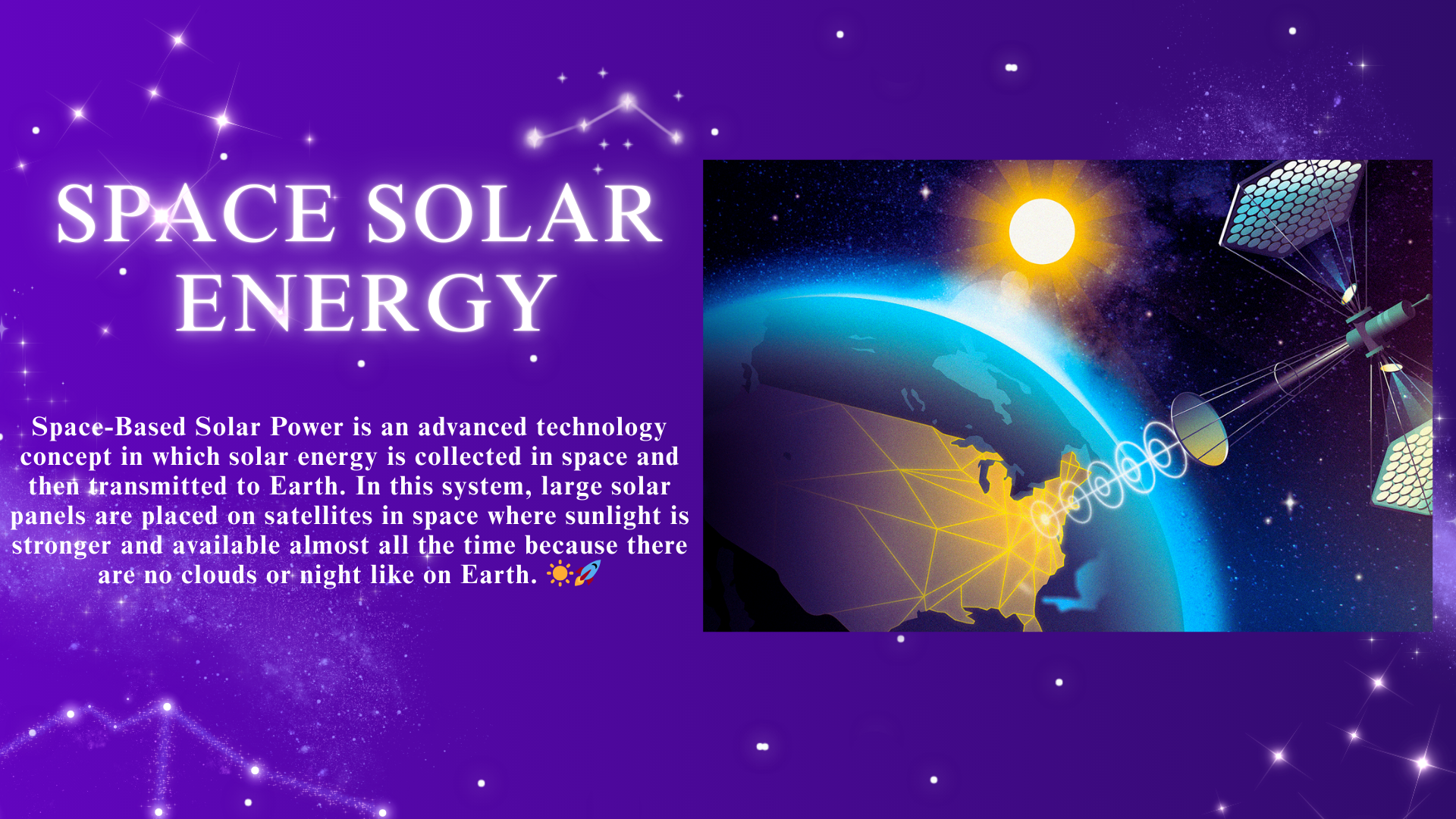
We are seeing a dual-threat approach to infrastructure. First, massive fiber build-outs are providing the low-latency performance needed for real-time AI. Second, low-earth orbit (LEO) satellite networks are coming online to bring high-speed access to underserved regions . By 2029, three-quarters of enterprises are expected to adopt LEO connections to supplement ground networks . Technologies like direct-to-cell (D2C) satellite communication will increase the reliability of mobile coverage and expand service to previously unconnected populations, effectively removing adoption barriers for global digital services .
4. Sovereign AI and the Great Cloud Rethink
Geopolitics is becoming inseparable from IT architecture. Nations are moving to build "Sovereign Stacks"—independent technology ecosystems spanning semiconductor fabs, AI models, and data infrastructure .
This is driving a wave of cloud rationalization. After years of unfettered cloud expansion, businesses are confronting spiraling costs. In 2026, a wave of repatriation is expected, with some workloads moving back from public cloud environments into private or hybrid clouds where performance and costs can be more tightly controlled . This isn't a step back from the cloud, but a maturation of it, with companies adopting multi-cloud models for resilience and composable infrastructure for flexibility .
Furthermore, this shift is fueling the demand for sovereign cybersecurity capability. As cyber threats—often AI-powered themselves—grow in sophistication, governments and critical infrastructure providers are seeking in-country security services rather than relying solely on offshore providers .
5. Bio-Digital Interfaces and Adaptive Therapeutics
One of the most groundbreaking—and high-risk, high-reward—areas for 2026 is the convergence of biology and AI. The IEEE highlights the rise of adaptive bio-AI interfaces .
These systems continuously sense and interpret human biological signals (such as neural activity or heart rate) to adjust therapies in real time. For example, rather than a patient taking a static dose of medication, an AI-driven system could monitor their condition and dynamically calibrate treatment. This represents a fundamental shift in digital health, moving from reactive medicine to continuously optimized care .
6. Practical Progress: Where the Money Goes
While the trends above are revolutionary, the Spiceworks Ziff Davis 2026 State of IT report reminds us that most budgets are flowing toward "practical progress" . The technologies poised for the highest growth are those that directly intersect with productivity and security.
This includes Embedded AI (copilots inside the apps we already use), IT Automation Platforms, and a massive push for Zero Trust Network Access (ZTNA) and Identity & Access Management (IAM) as perimeter-based security fades away . As AI becomes both an ally and an adversary in cybersecurity, investment in AI-powered Security Operations (SIEM) is skyrocketing .
Conclusion: The Execution Phase
For IT leaders and businesses, 2026 will not simply be another year of tech upgrades; it is a test of leadership and strategy . The organizations that succeed will be those that can translate the hype around AI into tangible value, manage the complexity of multi-cloud and sovereign infrastructure, and redesign their workforces to thrive in an autonomous age.
The future belongs to those who can make the leap from "now" to "next," treating technology not just as an enabler on the sidelines, but as the core driver of competitive advantage