 AETHERIUM
Drone Delivery System: The Future of Fast Delivery 🚁📦
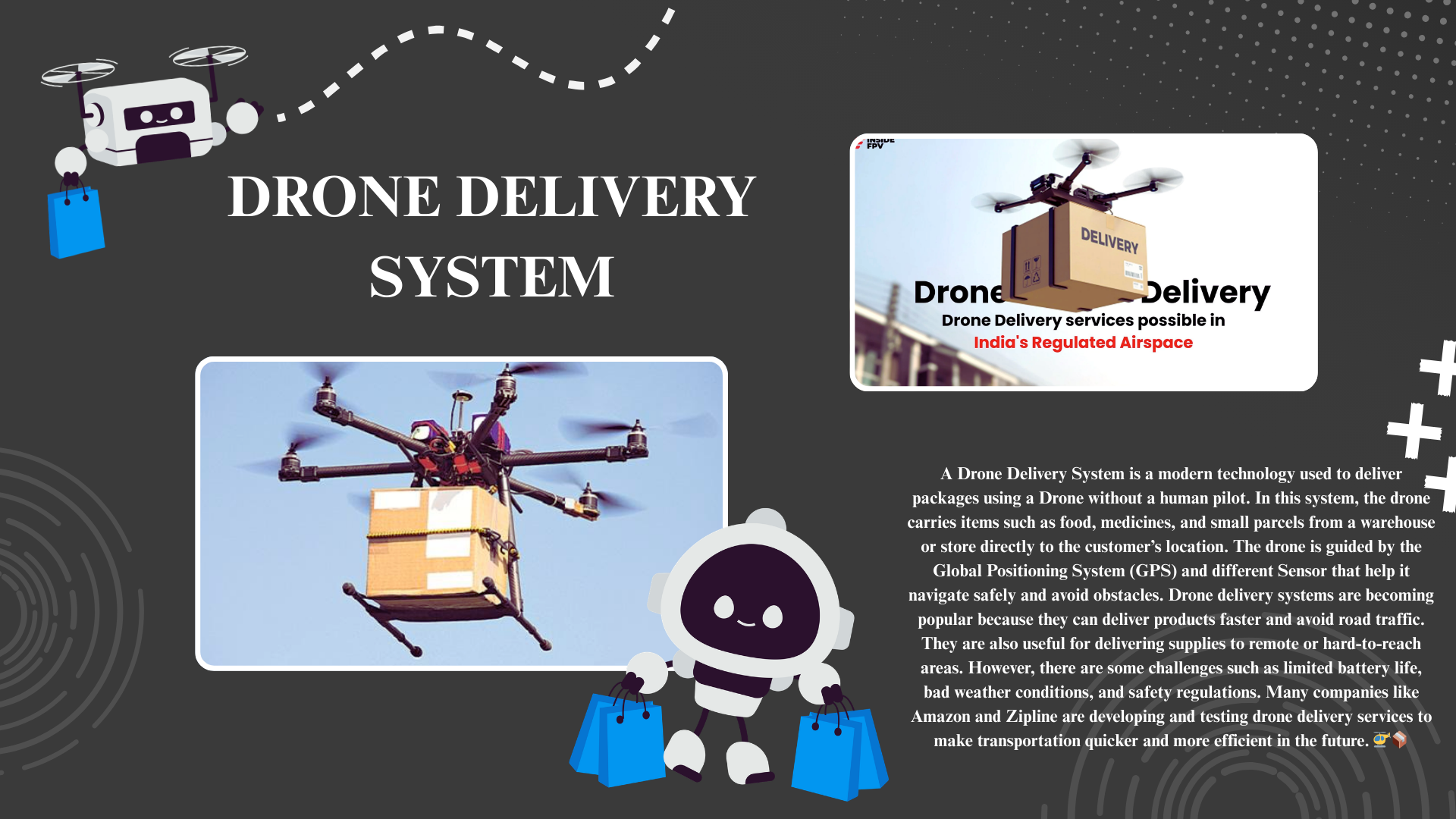
A Drone Delivery System is a modern logistics technology that uses Drone to transport packages directly from a warehouse or store to customers. This system aims to make deliveries faster, more efficient, and less dependent on road transportation. With the help of advanced navigation systems and sensors, drones can travel automatically and deliver small packages such as food, medicines, and parcels.
How Drone Delivery Works
A drone delivery system works through a combination of software, navigation systems, and hardware components. When a customer places an order online, the package is prepared at a distribution center and loaded onto a drone. The drone then flies to the destination using the Global Positioning System (GPS) for accurate navigation.
During the flight, drones use different Sensor to detect obstacles, maintain stability, and ensure safe delivery. Once the drone reaches the delivery location, it either lands or lowers the package using a cable system.
Key Components of a Drone Delivery System
1. Drone (UAV)
The drone is the main flying device that carries the package from the warehouse to the customer’s location.
2. Navigation System
GPS helps the drone determine its location and follow the correct route to reach the destination.
3. Sensors
Sensors detect obstacles such as buildings, trees, or other objects and help the drone avoid collisions.
4. Control Software
Special software and algorithms control the drone’s movement, flight path, and delivery operations.
5. Battery and Motors
Drones use rechargeable batteries and electric motors to power their flight.
Advantages of Drone Delivery
1. Faster Delivery
Drones can deliver packages in minutes by flying directly to the destination without traffic delays.
2. Reduced Transportation Cost
Automated delivery reduces the need for human drivers and vehicles.
3. Access to Remote Areas
Drones can deliver goods to villages, mountains, or disaster-affected areas where road access is difficult.
4. Environment Friendly
Electric drones produce less pollution compared to traditional delivery vehicles
Challenges of Drone Delivery
1. Limited Battery Life
Most drones can fly only for a limited time before they need recharging.
2. Weather Conditions
Strong winds, rain, or storms can affect drone flight and safety.
3. Safety and Security Issues
There are concerns about collisions, package theft, and privacy.
4. Government Regulations
Many countries have strict rules about where and how drones can fly
Future of Drone Delivery
The future of drone delivery looks very promising. As technology improves, drones will become faster, safer, and capable of carrying heavier packages. In the coming years, drone delivery systems may become a common part of everyday life, helping businesses deliver products quickly and efficiently.