 AETHERIUM
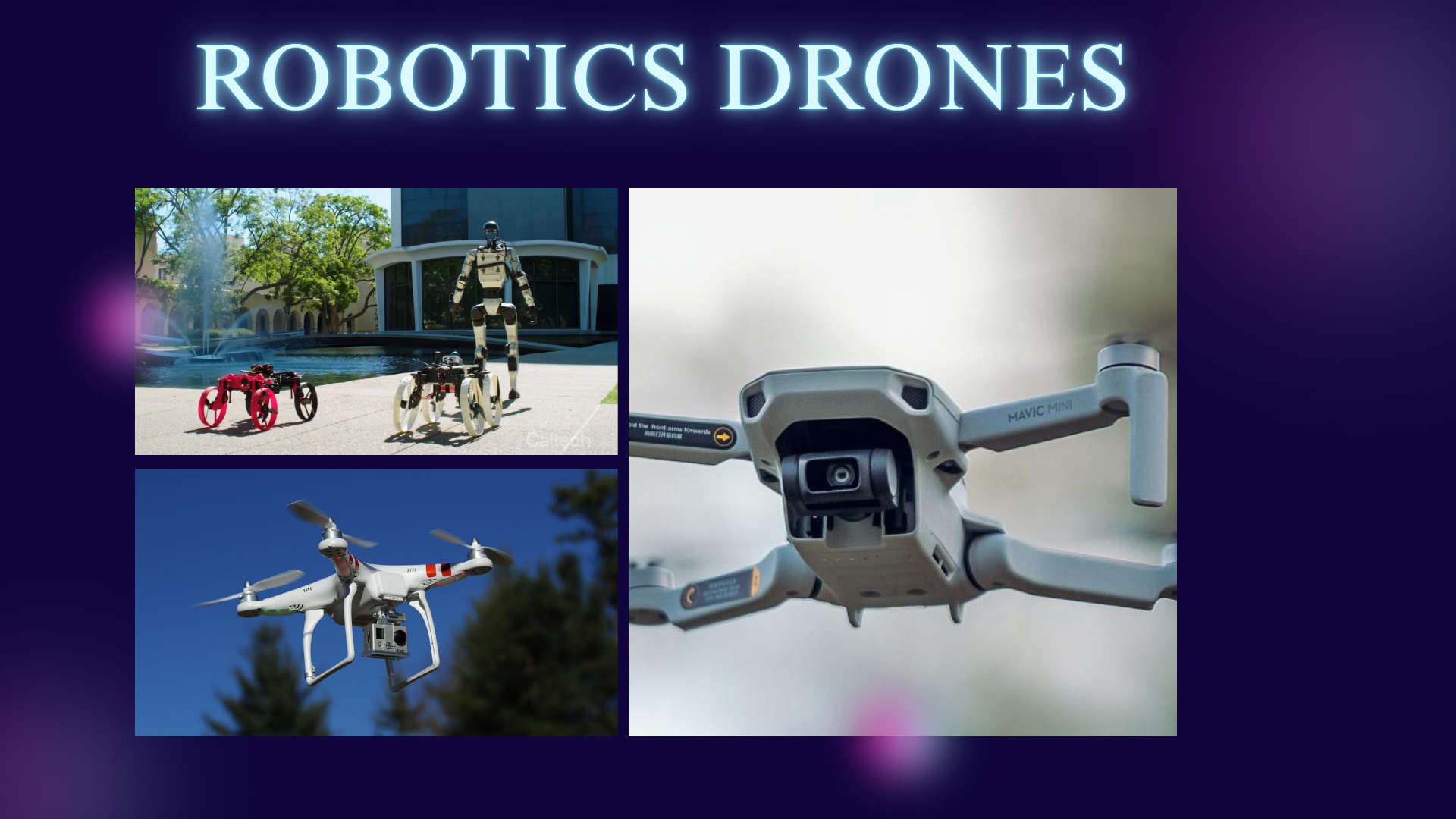
🚁 Robotic Drones: The Future of Smart Flying Technology 🤖🌍
🌟 Introduction
Robotic drones are one of the most exciting innovations in modern robotics and artificial intelligence. These are smart flying machines that can operate with remote control or fully autonomously using AI, sensors, and GPS. From capturing stunning aerial views to delivering packages, robotic drones are transforming many industries.
🤖 What are Robotic Drones?
Robotic drones are unmanned aerial vehicles (UAVs) equipped with advanced technologies like cameras, sensors, GPS, and AI systems. They can fly without a pilot onboard and perform a wide range of tasks efficiently and accurately.
They can be:
📡 Remote-controlled (human-operated)
🧠 Fully autonomous (AI-controlled)
⚙️ How Do Robotic Drones Work?
Robotic drones operate using a combination of smart technologies:
📍 GPS Navigation – Helps in accurate location tracking
📷 Cameras & Sensors – Capture images and detect obstacles
🧠 AI Systems – Enable autonomous decision-making
📡 Communication Systems – Control and data transmission
🔋 Battery Power – Provides energy for flight
These systems allow drones to fly safely, avoid obstacles, and complete tasks without human intervention.
🚁 Types of Robotic Drones
📸 1. Camera Drones
Used for photography and videography, especially in films and social media content.
🚚 2. Delivery Drones
Used for transporting packages, food, and medical supplies quickly.
🪖 3. Military Drones
Used for surveillance, defense, and reconnaissance missions.
🌾 4. Agricultural Drones
Used in farming for crop monitoring, spraying pesticides, and soil analysis.
🗺️ 5. Mapping Drones
Used for land surveying, construction planning, and 3D mapping
🌍 Applications of Robotic Drones
Robotic drones are used in many industries:
📦 E-commerce delivery
🎥 Film and media production
🏥 Medical supply delivery
🌾 Smart farming (agriculture)
🏗️ Construction and surveying
🪖 Defense and security
🌟 Benefits of Robotic Drones
⚡ Fast and efficient operations
💰 Cost-effective solutions
🛡️ Reduced human risk in dangerous areas
📊 High accuracy in data collection
🚀 Easy access to remote locations
🚀 Future of Robotic Drones
The future of robotic drones is very promising. With advancements in AI, drones will become smarter, faster, and more autonomous. They may soon be used for urban air taxis, emergency rescue operations, and fully automated delivery systems 🚁🤖🌍
🧾 Conclusion
Robotic drones are revolutionizing the way we see and interact with the world from above. They combine robotics, AI, and flight technology to perform tasks more efficiently and safely than ever before. In the coming years, drones will become an essential part of everyday life 🚁🌟