 AETHERIUM
🤖 Collaborative Robots (COBOTS): The Future of Human–Machine Teamwork
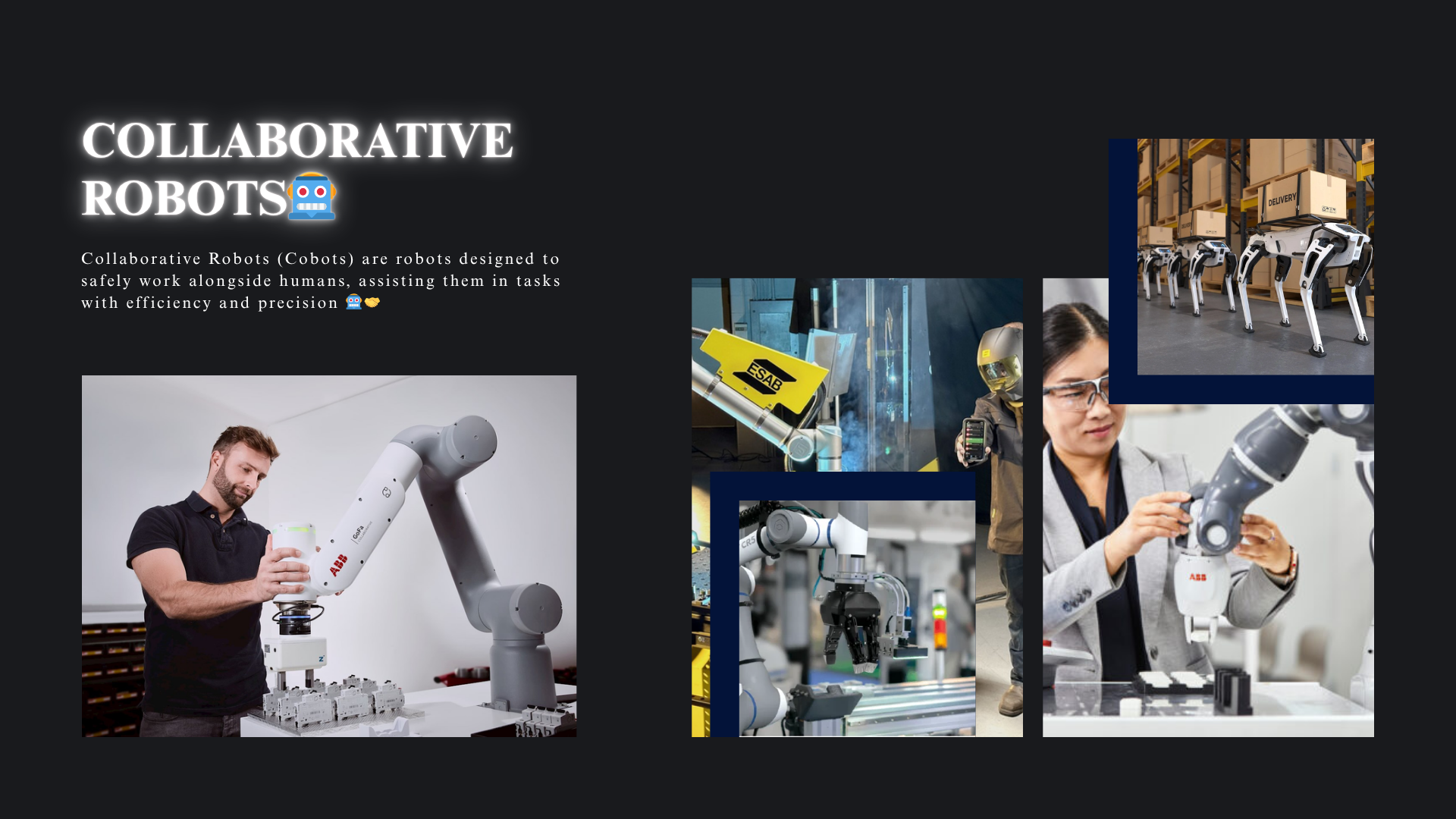
In today’s fast-evolving industrial landscape, collaborative robots—commonly known as (COBOTS)—are redefining how humans and machines work together 🤝. Unlike traditional robots that operate in isolation, (COBOTS) are designed to safely interact with humans, enhancing productivity, efficiency, and workplace safety.
🔍 What Are Collaborative Robots?
Collaborative robots are advanced robotic systems built to share workspace with humans. They are equipped with sensors, artificial intelligence, and safety features that allow them to detect human presence and adjust their actions accordingly ⚙️. This makes them ideal for tasks that require precision, repetition, or assistance.
🚀 Key Features of COBOTS
COBOTS stand out because of their unique capabilities:
Safety First 🛡️: Built-in sensors stop movement when human contact is detected
Easy to Use 🎯: Simple programming, often without advanced coding
Flexible Deployment 🔄: Can be quickly reprogrammed for different tasks
Cost-Effective 💰: Lower setup and maintenance costs compared to traditional robots
🏭 Applications Across Industries
COBOTS are widely used across multiple sectors:
Manufacturing: Assembly, packaging, and quality inspection
Healthcare: Assisting in surgeries and patient care 🏥
Logistics: Sorting, picking, and warehouse automation 📦
Small Businesses: Supporting repetitive tasks without heavy investment
🤝 Benefits of Human–Robot Collaboration
The integration of COBOTS brings several advantages:
Increased Productivity ⚡: Faster task completion with consistent quality
Improved Safety 👷: Reduced workplace injuries
Enhanced Efficiency 📈: Humans focus on creative tasks while robots handle repetition
Scalability 🔧: Easy to scale operations as needed
⚠️ Challenges to Consider
Despite their advantages, COBOTS also come with challenges:
Initial Investment 💸
Workforce Training 🎓
Integration with Existing Systems 🔗
Addressing these challenges is key to maximizing the benefits of COBOT adoption.
🌍 The Future of Cobots
As technology continues to advance, cobots are becoming smarter, more affordable, and more accessible 🚀. With improvements in AI and machine learning, they will play an even bigger role in industries worldwide, supporting humans rather than replacing them.
✨ Conclusion
Collaborative robots are not just machines—they are teammates 🤖🤝. By combining human intelligence with robotic precision, COBOTS are shaping a future where work is safer, smarter, and more efficient.