 AETHERIUM
Air and Water Hybrid Drones: A New Era of Exploration 🌊🚁
Introduction 🌍
Technology is breaking boundaries, and one of the most exciting innovations today is the air and water hybrid drone. These advanced machines can operate in both sky and underwater environments, making them extremely useful for research, surveillance, and rescue missions. Their dual capability is opening new possibilities in robotics and exploration.
What Are Air and Water Hybrid Drones? 🤔
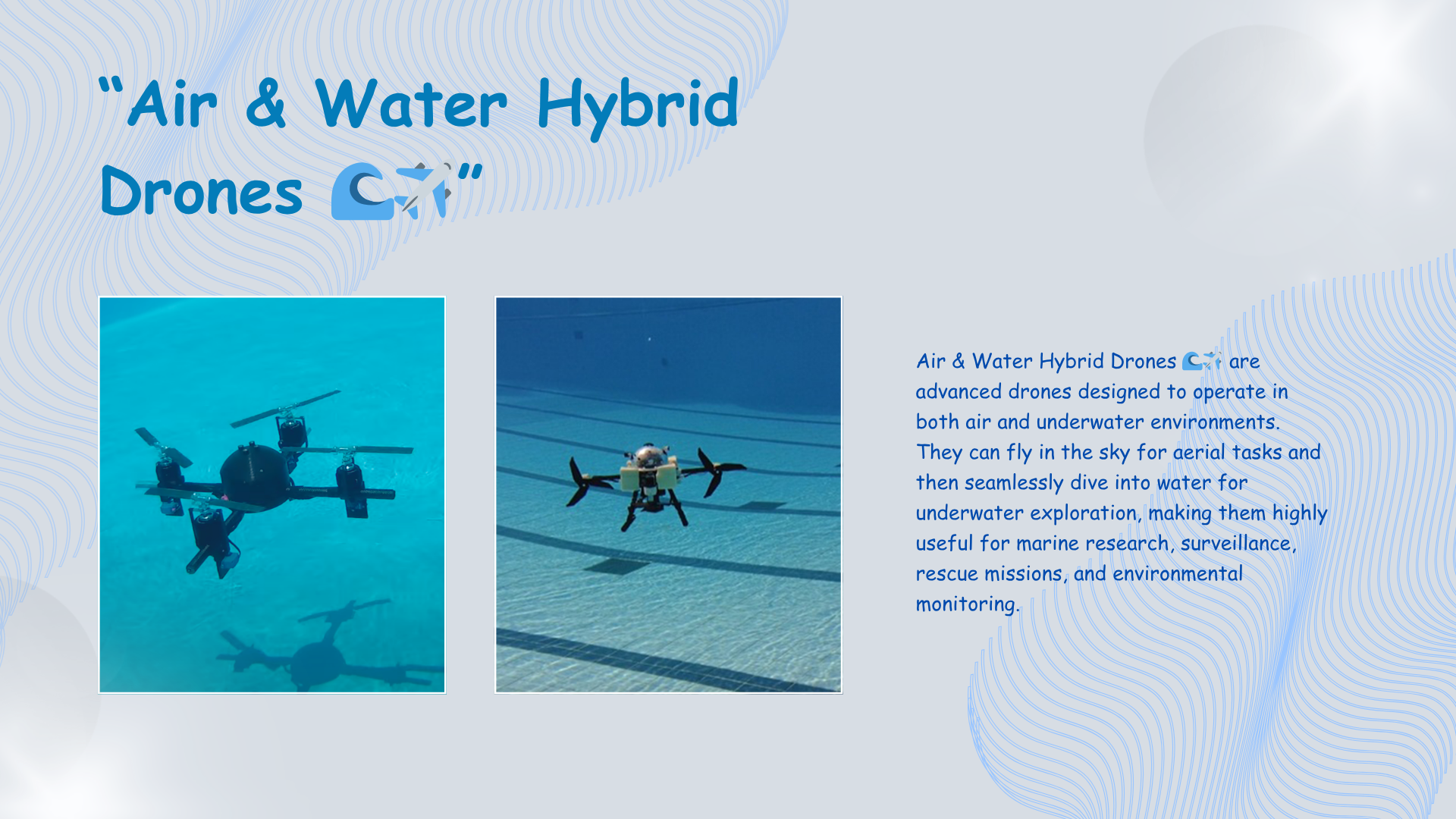
Air and water hybrid drones are specially designed unmanned vehicles that can fly like a normal drone in the air and also move underwater like a small submersible. They are built using waterproof materials, sealed electronics, and smart propulsion systems that allow smooth transition between air and water.
How Do They Work? ⚙️
These drones use two different operating modes. In air mode, they use propellers to fly just like regular drones 🚁. When they land on water, they switch to underwater mode, where waterproof motors and buoyancy control help them move beneath the surface 🌊. Advanced sensors and AI systems assist in navigation and stability in both environments.
Key Applications 🌊🚁
Air and water hybrid drones are used in many important fields:
Marine Research 🐠 – studying underwater life and ecosystems
Disaster Management 🚑 – flood rescue and emergency operations
Defense & Surveillance 🛰️ – monitoring coastal and underwater areas
Environmental Monitoring 🌍 – tracking pollution and climate changes
Infrastructure Inspection 🏗️ – checking bridges, ships, and offshore structures
Advantages 🚀
These drones offer many benefits. They reduce the need for separate air and underwater devices, saving time and cost. Their ability to perform dual-environment missions makes them highly efficient. They are also useful in reaching dangerous or hard-to-access areas without risking human life.
Challenges ⚠️
Despite their benefits, there are some challenges. Designing a drone that works efficiently in both air and water is technically complex. They require strong waterproofing systems, advanced materials, and efficient energy usage 🔋. Battery life and durability are also major concerns in long missions.
Future Scope 🔮
The future of air and water hybrid drones is very promising. With improvements in AI, robotics, and battery technology, these drones will become smarter, faster, and more reliable. They are expected to play a major role in ocean exploration, environmental protection, and global safety systems.
Conclusion ✨
Air and water hybrid drones represent a powerful innovation in modern technology. Their ability to operate in two different environments makes them highly valuable for science, security, and rescue operations. As technology continues to evolve, these drones will become an essential part of future exploration systems 🌊🚁🌍.