 AETHERIUM
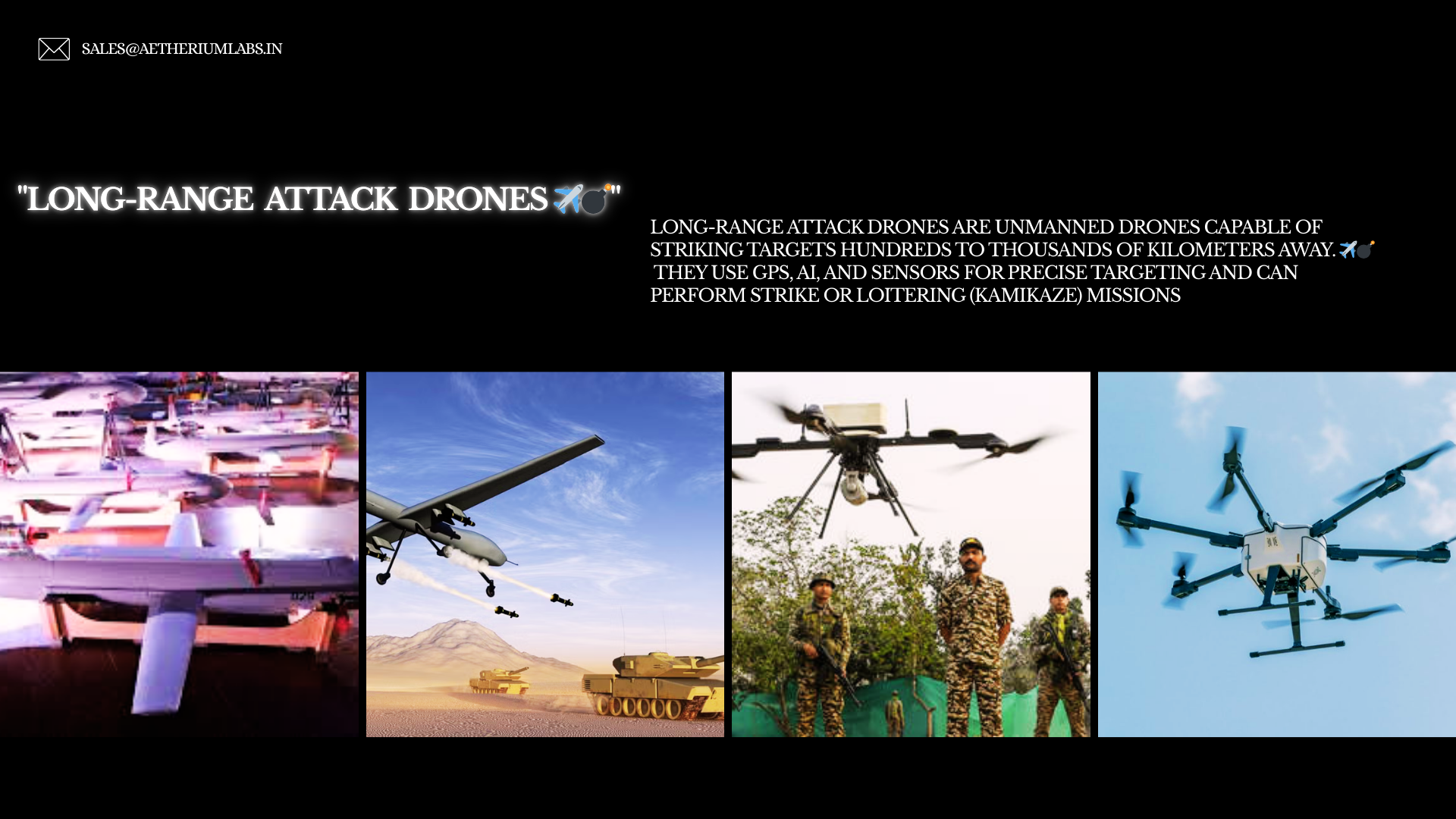
Long-Range Attack Drones ✈️💣: Redefining Modern Warfare
Drones have revolutionized modern warfare, and among them, long-range attack drones stand out as a game-changer. These unmanned aerial vehicles (UAVs) are designed to strike targets hundreds to thousands of kilometers away with remarkable precision, all without putting human pilots at risk.
What Are Long-Range Attack Drones?
Long-range attack drones are military UAVs capable of conducting strikes over extended distances. Unlike regular drones, which may only perform surveillance or short-range missions, these drones can carry missiles, bombs, or act as loitering munitions to neutralize high-value targets far from the battlefield.
They are equipped with advanced GPS navigation, AI-powered targeting systems, and sensors that allow them to detect, track, and attack targets accurately.
Advantages of Long-Range Attack Drones
Reduces risk to pilots: No human presence in high-risk zones. 🧑✈️❌
High precision: Accurate targeting reduces collateral damage. 🎯
Strategic flexibility: Can strike deep behind enemy lines. 🌐
Cost-effective: Cheaper than deploying manned fighter jets. 💰
Challenges and Risks
Cybersecurity threats: Hacking or signal jamming can disable drones. 🛡️⚠️
Ethical concerns: Collateral damage and autonomous decision-making raise moral questions.
Reliability: Long missions over hostile territory require high-end maintenance and backup systems
Real-World Applications
Military Strikes: Precision attacks on high-value targets.
Surveillance Integration: Long-range drones can scout and strike in the same mission.
Border Security: Monitor and neutralize threats far from friendly bases.
Conclusion
Long-range attack drones ✈️💣 represent a fusion of advanced technology, AI, and military strategy. They enable precision strikes over vast distances, reduce human risk, and redefine modern combat. While challenges like cybersecurity and ethical concerns remain, these drones are undeniably the future of strategic air warfare.