 AETHERIUM
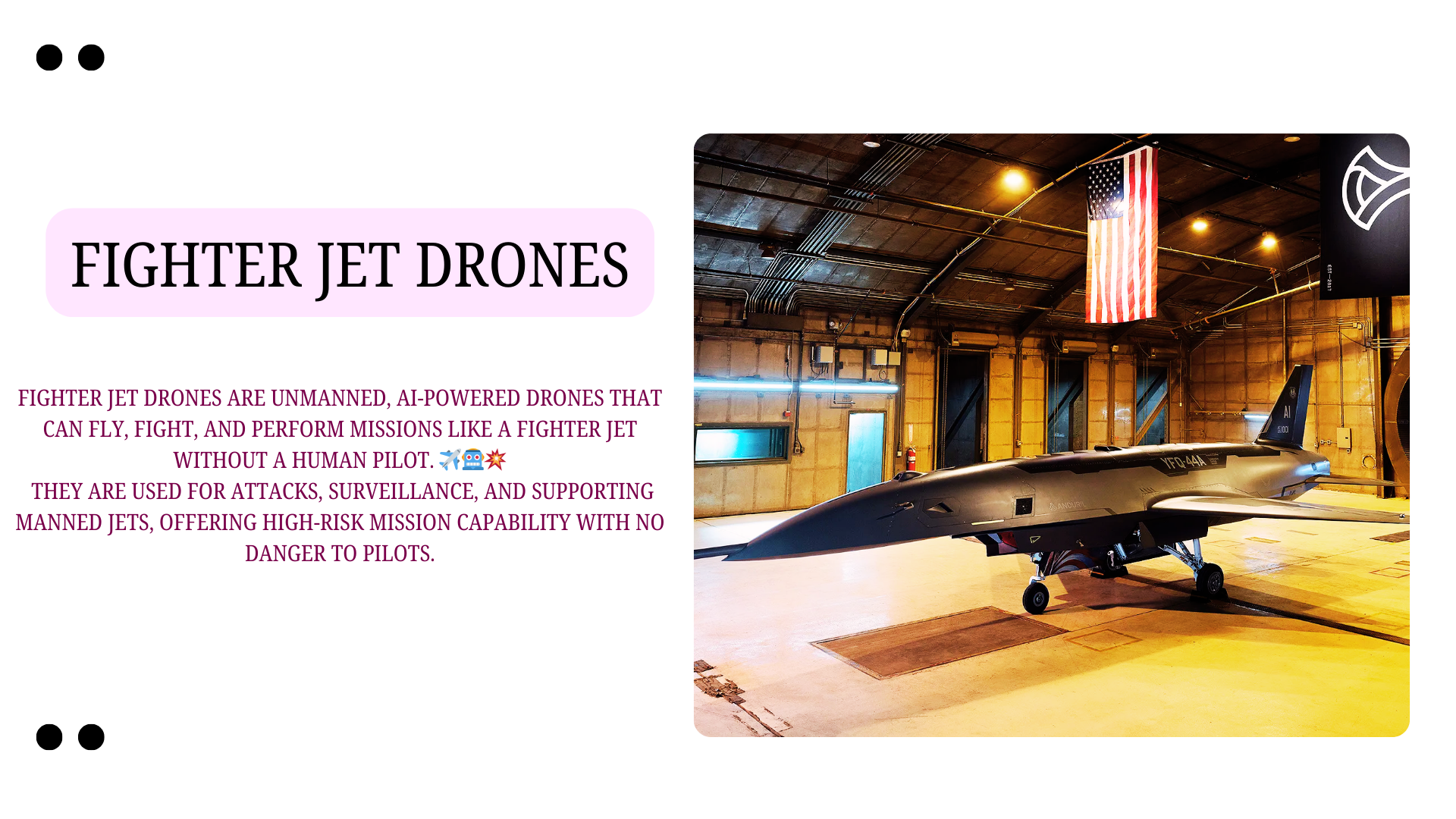
Fighter Jet Drones ✈️🤖: The Future of Unmanned Aerial Combat
The evolution of drones has taken modern warfare to a new level. Among the most advanced are fighter jet drones, unmanned aerial vehicles (UAVs) designed to perform combat missions like traditional fighter jets—but without human pilots. These drones combine artificial intelligence (AI), advanced sensors, and high-speed maneuverability to redefine air combat.
What Are Fighter Jet Drones?
Fighter jet drones are unmanned combat aircraft capable of performing attacks, surveillance, and tactical missions. Unlike conventional drones, they are built for high-speed operations, agile maneuvering, and frontline missions.
They can operate either autonomously using AI or under remote human control, making them highly versatile and suitable for dangerous missions where sending human pilots would be risky.
Key Features
AI-Powered Autonomy 🤖
Can navigate, detect targets, and make tactical decisions independently.
High-Speed Combat Capability ✈️
Built for agile maneuvers similar to manned fighter jets.
Capable of evading enemy radar and countermeasures.
Advanced Sensors & Targeting 🎯
Equipped with radar, cameras, and infrared sensors to track enemy movement.
Can lock onto targets for precision strikes.
Weapons Integration 💣
Can carry missiles, bombs, or other munitions depending on mission requirements.
Advantages of Fighter Jet Drones
Reduced Risk to Pilots 🧑✈️❌ – No human lives are at stake in high-risk missions.
Cost-Effective 💰 – Cheaper than producing and maintaining manned fighter jets.
High-Risk Mission Capability ⚡ – Can be sent into hostile zones without fear of pilot loss.
Flexible Combat Roles 🔄 – Can switch between attack, reconnaissance, and support missions.
Challenges and Limitations
Cybersecurity Risks 🛡️ – Vulnerable to hacking or signal jamming.
Ethical & Legal Concerns ⚖️ – Autonomous strikes raise questions about accountability.
AI Decision Errors ❌ – Mistakes in autonomous operations could cause unintended damage
Applications
Military Combat – Frontline strikes, defense missions, and tactical air support.
Surveillance & Reconnaissance – Monitoring enemy movements and mapping combat zones.
Support Missions – Flying alongside human pilots as loyal wingmen or decoys.
Conclusion
Fighter Jet Drones ✈️🤖 are reshaping modern aerial warfare. Combining AI, advanced sensors, and combat capabilities, they allow militaries to perform high-risk missions safely, efficiently, and effectively. As technology advances, fighter jet drones are poised to become an essential element of the future battlefield, reducing risks to pilots while expanding strategic possibilities.