 AETHERIUM
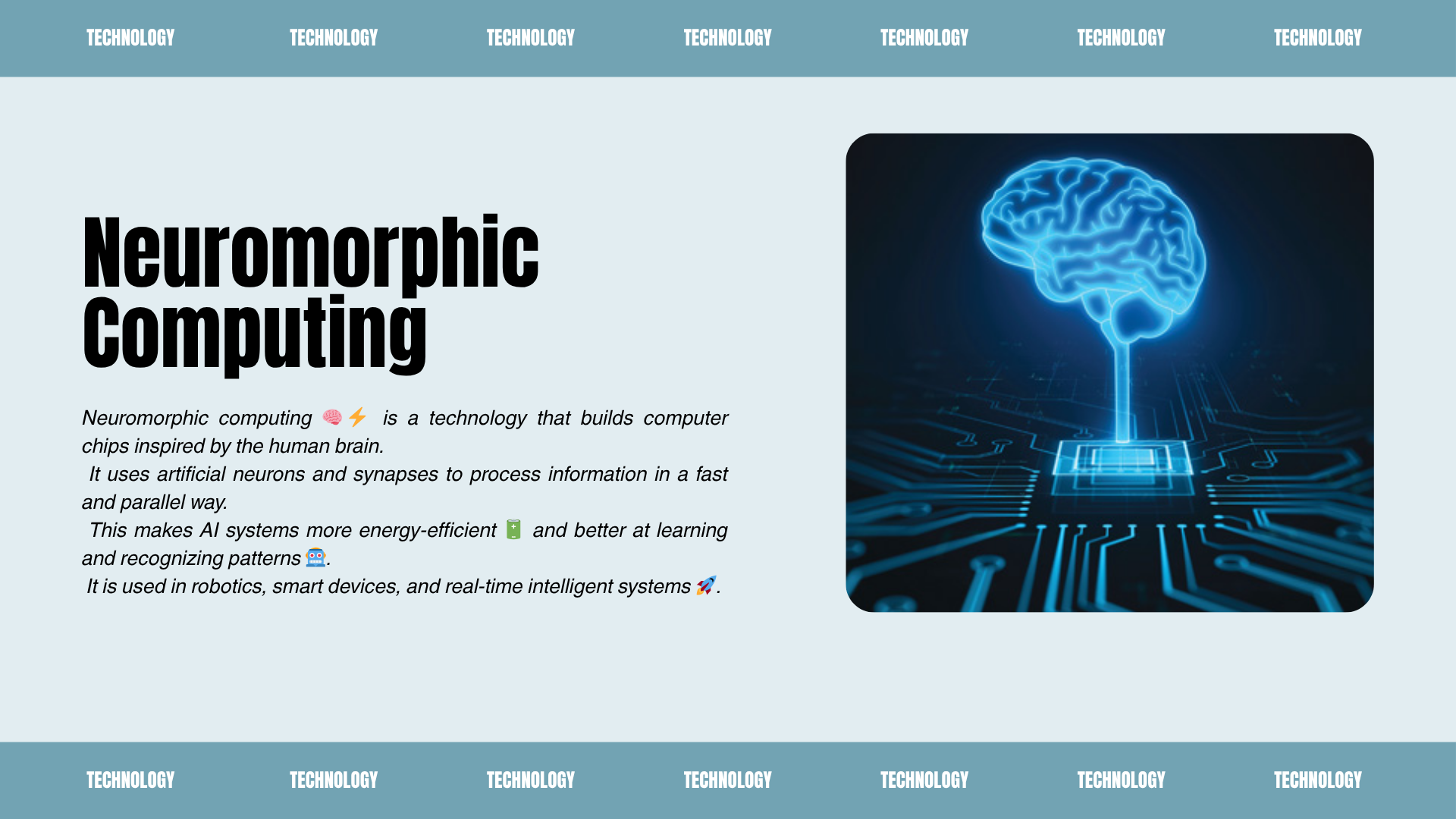
Neuromorphic Computing: The Future of Brain-Inspired Technology 🧠⚡
Introduction 🌍
Modern computing is reaching new limits, especially when it comes to speed, energy efficiency, and real-time learning. To overcome these challenges, scientists have developed neuromorphic computing, a revolutionary technology inspired by the structure and functioning of the human brain.
What Is Neuromorphic Computing? 🤔
Neuromorphic computing is a type of computer design that mimics the brain’s neural network. Instead of using traditional binary processing, it uses artificial neurons and synapses to process information in a more natural and parallel way. This makes systems more intelligent and energy-efficient 🔋.
How Does It Work? ⚙️
In neuromorphic systems, data is processed using neuron-like circuits that communicate through electrical signals, similar to brain cells 🧠. These systems can learn from experience, adapt to new data, and make decisions without needing constant reprogramming. This allows real-time learning and fast responses.
Key Applications 🚀
Neuromorphic computing is used in many advanced fields:
Artificial Intelligence 🤖 – faster and smarter AI models
Robotics 🤖 – adaptive and intelligent robots
Healthcare 🏥 – brain simulation and medical analysis
Autonomous Vehicles 🚗 – real-time decision-making systems
Edge Devices 📱 – low-power smart devices
Advantages ⚡
This technology offers several benefits. It consumes very low power compared to traditional computers. It processes information in parallel, making it extremely fast. It also improves learning capabilities, allowing systems to adapt like the human brain.
Challenges ⚠️
Despite its advantages, neuromorphic computing is still developing. It is complex to design and manufacture. There are limited commercial systems available, and programming these brain-like chips is different from traditional computing methods.
Future Scope 🔮
The future of neuromorphic computing is very promising. It is expected to play a major role in advanced AI, robotics, and next-generation computing systems. With continuous research, it may revolutionize how machines think and learn, bringing us closer to human-like intelligence.
Conclusion ✨
Neuromorphic computing 🧠⚡ represents a major step forward in technology. By imitating the human brain, it creates smarter, faster, and more energy-efficient systems. As development continues, it will become a key foundation for the future of artificial intelligence and computing 🌍🚀.