 AETHERIUM
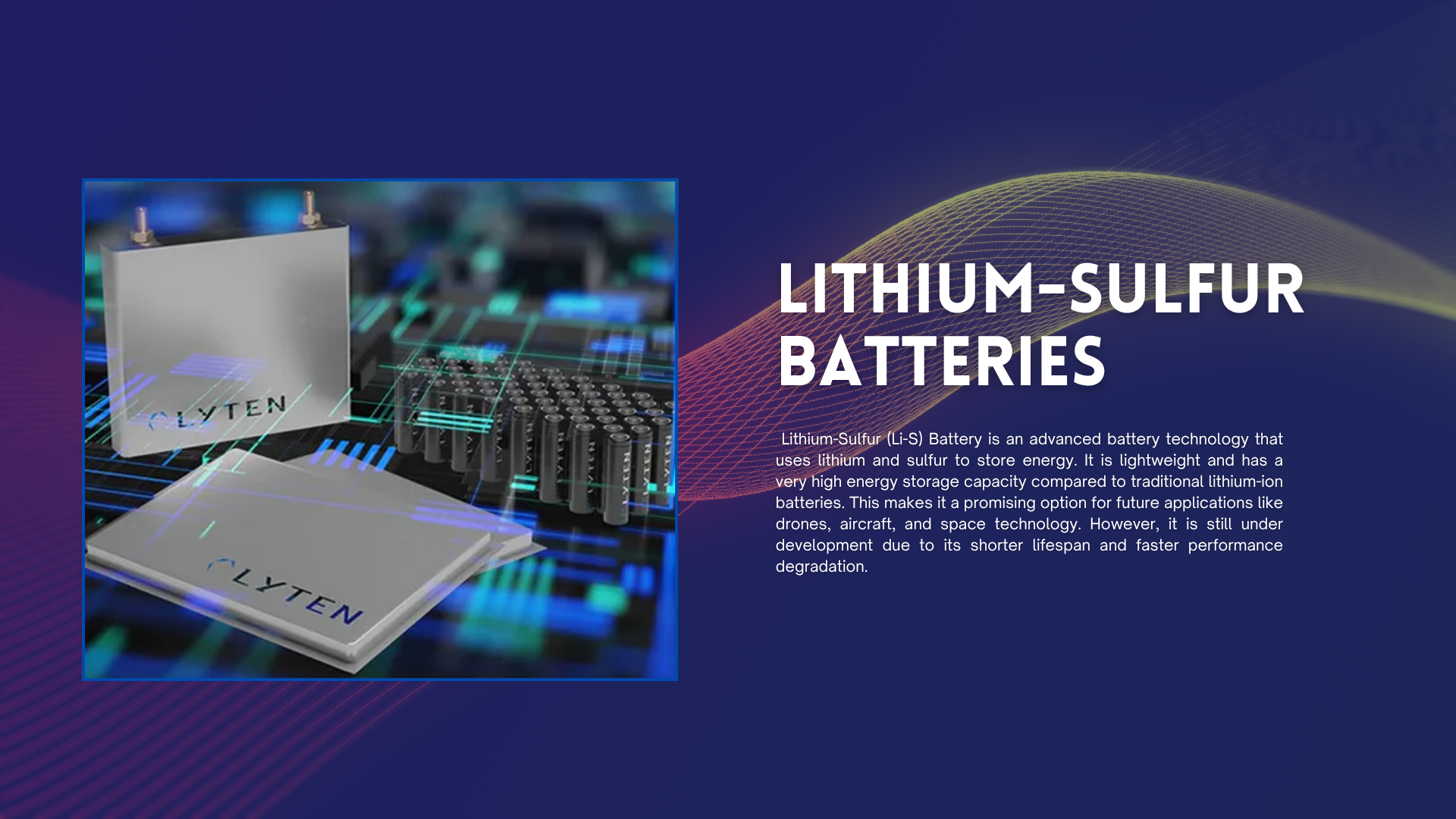
🔋 Lithium-Sulfur Batteries: The Future of High-Energy Storage
Lithium-Sulfur (Li-S) batteries are an advanced energy storage technology that uses lithium and sulfur as the main materials to store and release energy ⚡. They are considered one of the most promising next-generation battery technologies due to their high energy capacity and lightweight structure 🚀.
🧪 What are Lithium-Sulfur Batteries?
Lithium-Sulfur batteries work by using a chemical reaction between lithium and sulfur to store energy 🔋. During discharge, lithium moves between electrodes, producing electricity. Because sulfur is lightweight and abundant, these batteries can store more energy compared to traditional lithium-ion batteries.
⚡ Key Features of Lithium-Sulfur Batteries
🔋 High energy density (more power in less weight)
⚖️ Lightweight design
🌱 Environment-friendly materials (sulfur is abundant and less toxic)
💰 Potential for low-cost production in the future
🚀 Suitable for high-performance applications
🚀 Applications of Lithium-Sulfur Batteries
Lithium-Sulfur batteries are still in development but have huge potential in several industries:
🚗 Electric vehicles (EVs) for longer driving range
✈️ Aerospace and aircraft systems
🛰️ Space missions and satellites
🛸 Drones requiring lightweight and long-lasting power
📱 Future portable electronic devices
⚠️ Challenges and Limitations
Despite their advantages, Lithium-Sulfur batteries still face some challenges:
⏳ Shorter lifespan compared to lithium-ion batteries
🔄 Performance degradation after multiple charging cycles
🧪 Technical difficulties in improving stability
💡 Still under research and not widely commercialized
🔮 Future of Lithium-Sulfur Batteries
Scientists and companies are actively working to solve current limitations and improve performance. In the future, Lithium-Sulfur batteries could replace lithium-ion batteries in many applications due to their higher energy capacity and lower environmental impact 🌍.
They are expected to play a major role in electric vehicles, aviation, space exploration, and next-generation portable electronics 🚀.