 AETHERIUM
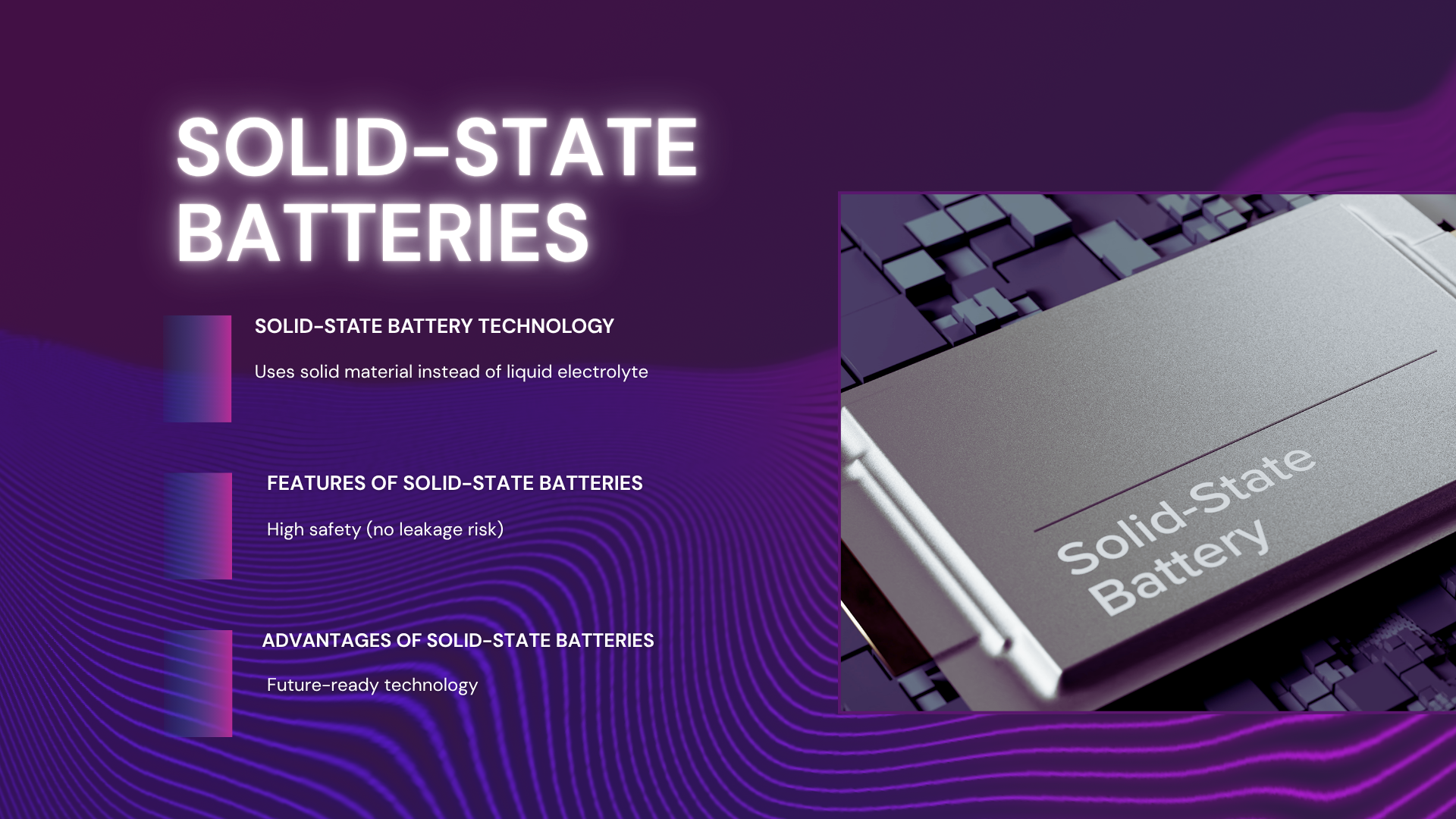
🔋 Solid-State Batteries: The Future of Safe and Powerful Energy Storage
Solid-State Batteries are an advanced battery technology that uses a solid electrolyte instead of a liquid or gel-based one ⚡. This simple change makes them safer, more efficient, and a strong candidate for the next generation of energy storage systems 🚀.
🧪 What are Solid-State Batteries?
In traditional lithium-ion batteries, a liquid electrolyte helps move ions between electrodes. In Solid-State Batteries, this liquid is replaced with a solid material 🔋. This solid electrolyte improves stability and reduces many risks like leakage or overheating.
⚡ Key Features of Solid-State Batteries:
🔋 Higher energy density (more power in smaller size)
🔥 Much safer with low fire and explosion risk
⚡ Faster charging capability
📏 Compact and lightweight design
🔄 Longer lifespan compared to traditional batteries
🌱 Better thermal stability (works in high temperatures)
🚗 Applications of Solid-State Batteries
Solid-State Batteries have huge potential across multiple industries:
🚗 Electric vehicles (EVs) with longer driving range
📱 Smartphones and wearable devices
💻 Laptops and portable electronics
🏥 Medical devices requiring reliable power
✈️ Aerospace and aviation systems
⚠️ Challenges and Limitations:
Even though Solid-State Batteries are very promising, they still face some challenges:
💰 High production cost
🏭 Difficult large-scale manufacturing
🔬 Material and engineering challenges
⏳ Still under development for mass commercial use
🔮 Future of Solid-State Batteries:
Companies and researchers around the world are heavily investing in Solid-State Battery technology. It is expected that in the coming years, these batteries could replace lithium-ion batteries in many applications due to their safety, efficiency, and long life 🚀.
Major automobile companies are already testing this technology for next-generation electric vehicles 🚗.
🧠 Conclusion:
Solid-State Batteries represent a major breakthrough in energy storage technology. With their high safety, fast charging, and long lifespan, they are expected to play a key role in shaping the future of electric vehicles, electronics, and clean energy systems 🔋⚡🌍